


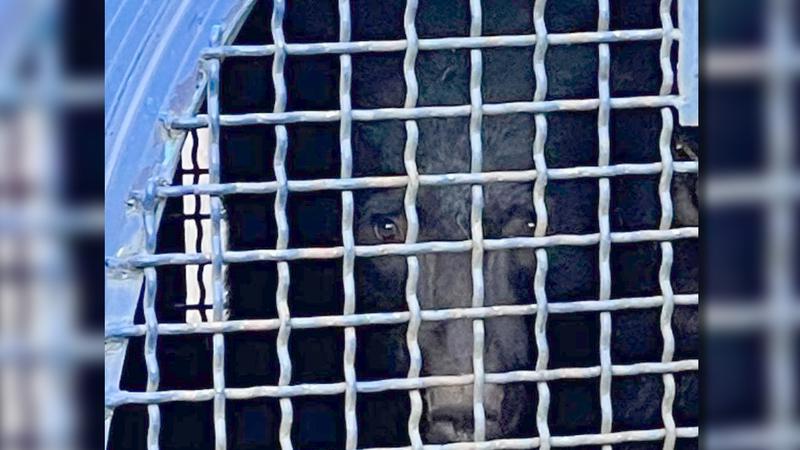
QUALICUM BEACH — A mid-Island resident is beefing up her outdoor livestock security after a black bear killed two of her goats.
Katie Heagle, her partner and four kids woke up around 7 a.m. on Monday, April 25, to do their regular chores when they noticed their goat house appeared to have been broken into.
Two of their beloved goats, Kezia and Manny, were also missing.
“We lock our goats, horses, and pigs in every night, and they are protected. But he (the bear) managed to somehow open the gate latch to get in there. He was a tricky little juvenile bear.”
Her family moved into their five-acre home in September 2021 on Hollywood Rd. near the Qualicum Beach airport and heard from neighbours bears had been seen eating fallen fruit from their yard in years prior.
“We’re surrounded by farms and across the street, they lost a couple of lambs within the last few weeks to the bear as well. So he has been frequently all the property’s up Fern Rd. and visiting garbage and animals, apparently.”
After a few hours of searching, Heagle said they found their goat’s remains, prompting a call to the conservation office.
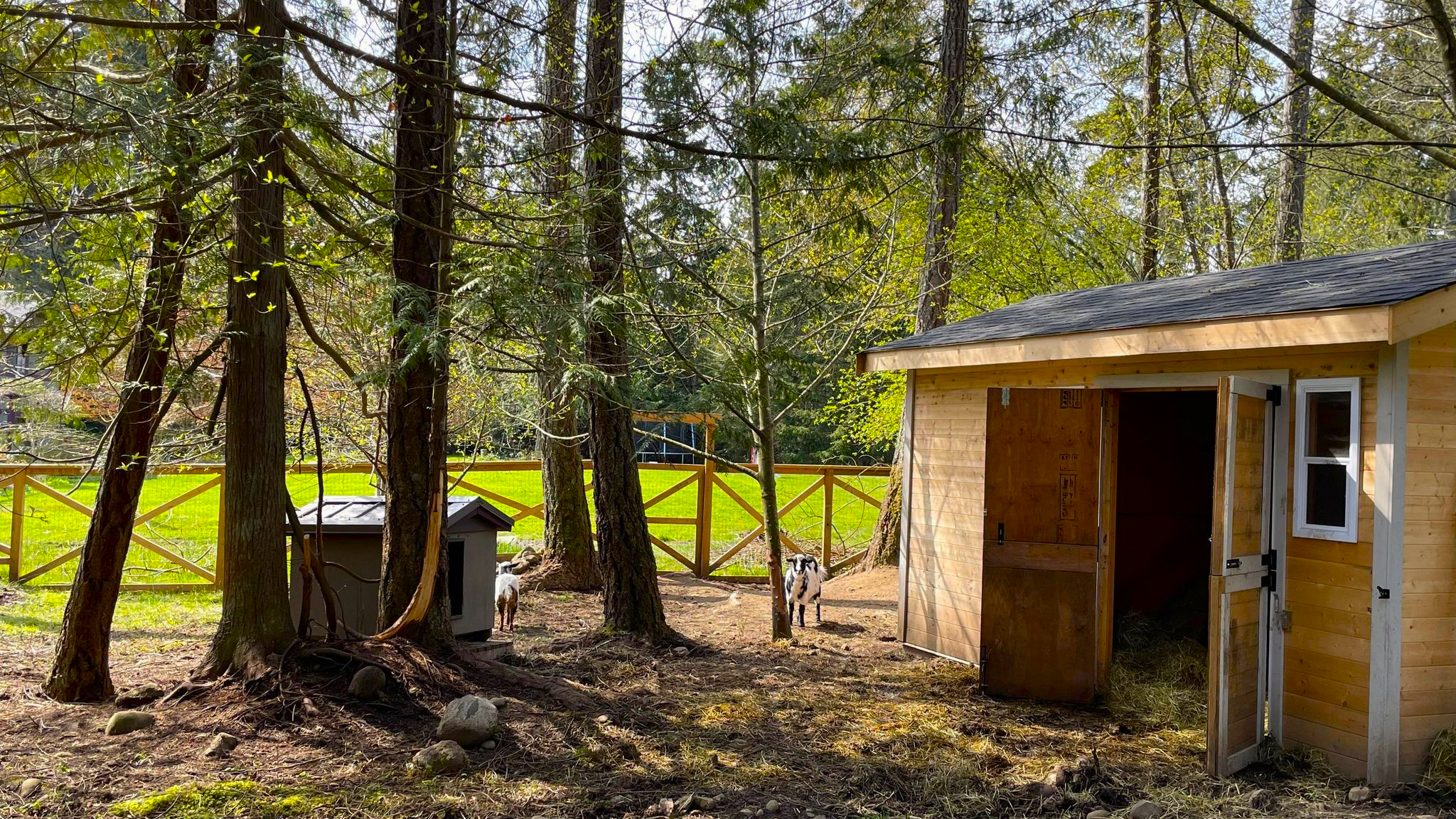 Heagle said the bear somehow managed to open the gate latch in order to get into the goat’s enclosure, pictured here on the right. (Katie Heagle)
Sgt. Stuart Bates arrived later in the day and set a live trap for the bear. He was able to capture the animal a short time later.
Unfortunately, the bear had to be destroyed.
Bates said when a bear goes through someone’s garbage, the situation can be fixed by moving the garbage cans inside.
However, it’s a different story when the bear is able to get into a secured structure.
“Once a bear has broken into a structure and received a food reward we don’t relocate those bears because it won’t be long before it starts looking towards bigger structures, like houses, to see if there is a food reward in there.”
Bates said the bear returned to the scene about five hours after they set the live trap, confirming it was the offending bear.
“I set the trap right where the two dead goats were left by the bear using one of the goats as bait, on the inside of someone’s fence. The chances of another bear being there are pretty slim, and the chances of another one being there less than 12 hours after killing the goats was pretty slim.”
 Using one of the deceased goats as bait, the conservation officer was able to quickly trap the juvenile bear into this bear trap. (Katie Heagle)
Why destroy?
A common question Bates hears whenever they are forced to destroy a bear, is why they couldn’t just relocate it instead?
He told NanaimoNewsNOW with 12,000 to 15,000 black bears estimated to be on the 30,000 square kilometre Vancouver Island, it doesn’t leave what they call, “a lot of vacancies at the inn.”
“We have learned from the bears we do relocate who have done nothing wrong, they either come back or go to another town.”
He mentioned a bear they had once relocated from Port Alberni to the base of Mount Arrowsmith, some 20 kilometres away was tagged with a tracking collar.
Three weeks later it turned up outside the Ladysmith Community Health Centre.
“He had never been there in his life, and he had to just about run there. So when we say relocation doesn’t work when it’s a problem bear that’s learned to associate people with food, we are speaking from experience.”
Once a bear is on the Conservation Officers’ radar as being problematic, their status never reduces and the unfortunate outcome of them being destroyed becomes almost guaranteed.
Protecting yourself and your livestock
Bates said it goes without saying that bears are incredibly strong. He once witnessed a bear cub who weighed less than 50 pounds break a car window with minimal effort.
He said the best bear deterrent is electric fences.
“There’s a reason all the beekeepers have electric fences that they have in hives out in the forest, that’s because it’s your best deterrent.”
He said last year they went around to 11 different properties where bears had previously broken into chicken coops and helped install electric fencing.
Since then, not a single bear has attacked any of those coops.
“It’s a 100 per cent success rate, so that’s the first step. If you’re going to get livestock like goats or pigs or chickens, get the electric fencing before you get the livestock, so the bear never learns there is food on the other side.”
Heagle said installing their electric fence will be their weekend project.
For more information on how to properly install electrified fences, you can go to the WildSafe BC’s website.
Join the conversation. Submit your letter to NanaimoNewsNOW and be included on The Water Cooler, our letters to the editor feature.
jordan@nanaimonewsnow.com
On Twitter: @JordanDHeyNow