


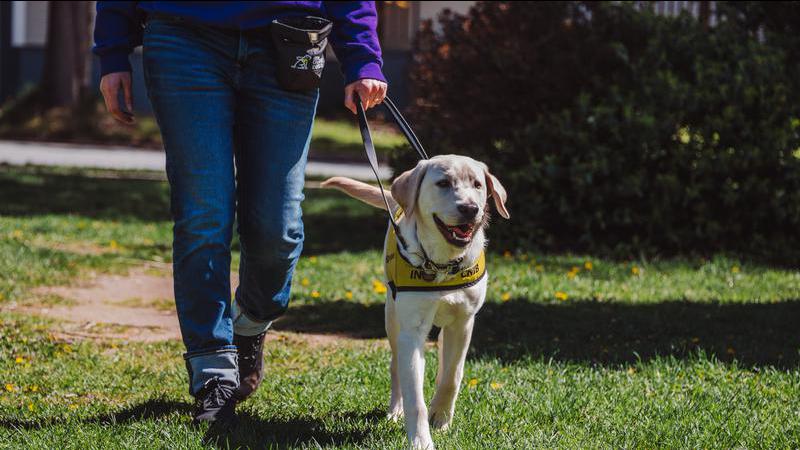
It’s a rewarding experience filled with unconditional love and the opportunity to change the life of someone who is blind.
Canadian National Institute for the Blind (CNIB) Guide Dogs is calling for volunteers to help raise and foster the next generation of guide dogs for those who are blind or partially sighted.
“There’s a huge need for guide dogs in Canada,” Andrea Critch, manager of early canine development at CNIB Guide Dogs, said. “Especially since the pandemic, the borders were closed so people could not travel outside of Canada to get their dogs. So, we did see a rise in demand.”
Critch said the waitlist for a guide dog can be anywhere from two to three years, so the rush is on to get as many pups trained as possible.
The road to becoming a guide dog starts early—at just eight weeks old—and takes nearly two years.
Puppies are placed with volunteer foster families who help with obedience, socialization, and exposure to real-world environments until the dogs are ready for advanced training at CNIB’s Canine Campus in Carleton Place, just outside Ottawa.
The dogs then undergo six to eight months of formal guide dog training before being matched with a handler.
Critch said the school is accredited with the International Guide Dog Federation, which means they have to abide by certain standards.
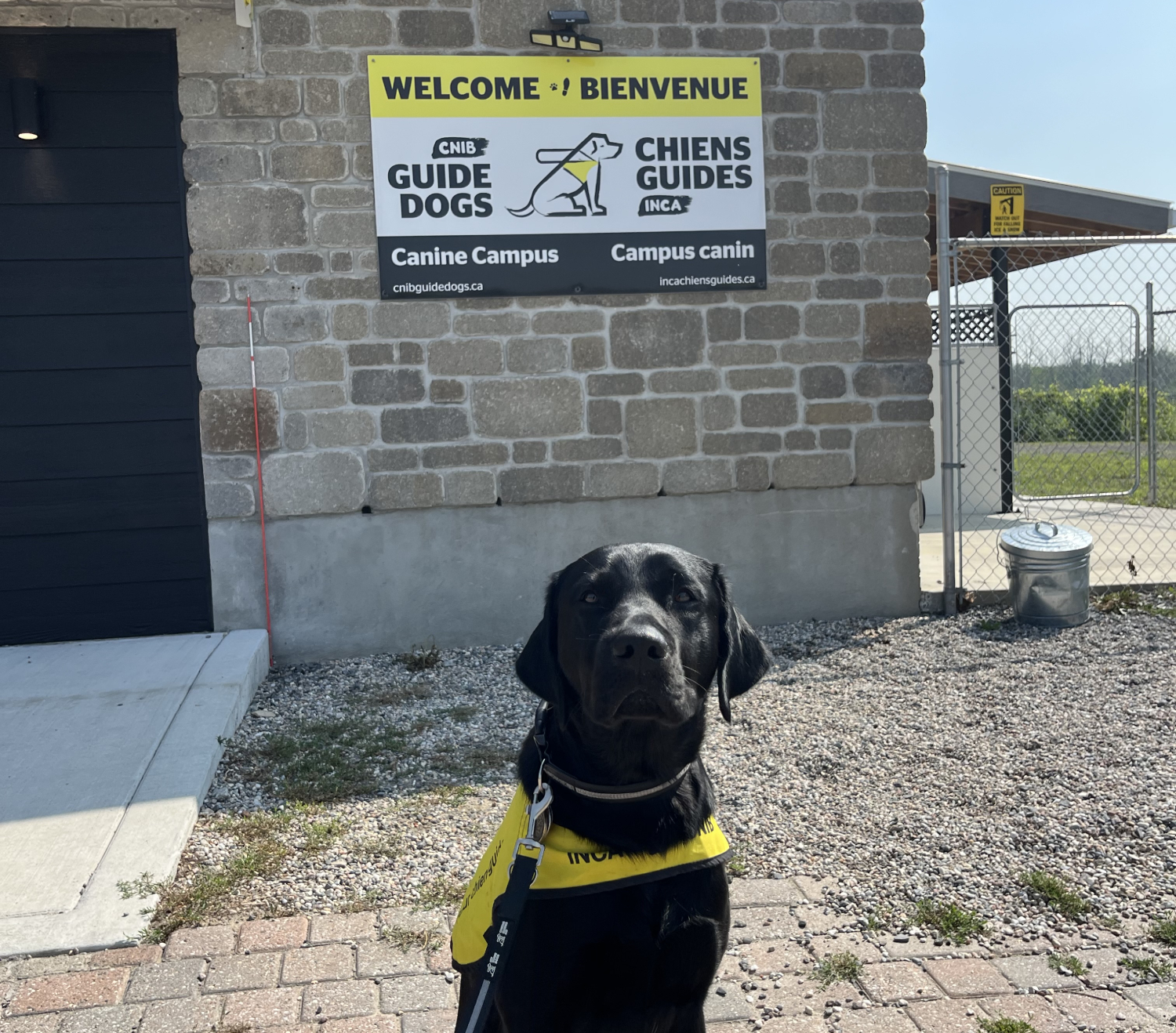 Volunteers are needed for various lengths of time to foster future CNIB guide dogs. (submitted photo/CNIB)
“We really take our time with the puppies. When they grow, we’re wanting to make sure that they’re developing and they’re growing appropriately and if we need to slow things down for them, we do that, so they have the confidence to go into formal training and learn all the advanced guiding skills they need.”
Those who are interesting in helping out can support the process by volunteering in a number of different roles.
‘Breeder Caregivers’ host CNIB breeding dogs in their homes and help whelp litters of future guide dogs.
Critch said some prior experience with whelping is recommended for that role, but volunteers for other roles don’t require professional training experience.
People can sign up for short-term boarding to provide a single day or up to a week of fostering, to help give regular foster families a break.
“We also have ‘Puppy Starter’ care where you would have a puppy from eight weeks old until they’re roughly six months old, focusing on basic obedience, house training and just the early socialization.”
‘Puppy Finishers’ take over at six months, helping to reinforce obedience and introduce more complex experiences like public transit.
‘Puppy Raisers’ are with the dogs from eight weeks until formal training begins – about 15 months in total.
“We provide full support and training,” said Critch. “We’re looking for people who are committed, willing to learn, and who love dogs—especially large breeds. Ideally, they’d have a vehicle so they can meet us at various appointments. Of course, everyone in your home would need to be on board with having a dog that you know you’re going to give up within six months to a year.”
All costs related to the dog’s care like food, training, vet care, crates, leashes, and toys are covered by CNIB. Additional purchases, like beds or extra toys, are optional and at the volunteer’s expense.
CNIB is currently seeking volunteers in several regions across Canada, including Victoria and Vancouver, B.C., Calgary, Alta., Winnipeg, MB, Greater Toronto Area, Ottawa, ON, and Halifax, N.S.
“Our volunteers are essential to the success of our guide dog program,” Critch said. “We’re hoping people who are ready and excited to get involved right away will reach out.”
Those interested in becoming a foster volunteer can learn more and register for an information session by visiting cnibguidedogs.ca/puppyraising.
We’re on Bluesky! Stay up to date on news across central Vancouver Island through Bluesky, by following @NanaimoNewsNOW.bsky.social.
info@nanaimonewsnow.com
Follow us on: Twitter (X) | Bluesky | Facebook