


NANAIMO — Local residents, service providers and City Council couldn’t be clearer: pending redevelopment of supportive housing at 250 Terminal Ave. must include a sizable dry housing component.
Community advocates, medical experts, and councillors debated what direction they’d like the province to take on Monday, June 8, during a special Governance and Priorities Committee meeting at the Vancouver Island Conference Centre.
Karen Kuwica, representing the Newcastle Neighbourhood Association, which encompasses 250 Terminal Ave., said the province made an error in not ensuring a dry housing model for the redevelopment, stating it could become “a model for recovery, wellness, and successful community integration.”
“Communities need housing developments that sustain wellness, safety, and successful community integration. Fifty-two low-barrier supportive housing units proposed at 250 Terminal will be sharing a driveway, parking, garbage facilities, and other amenities with the proposed 30 affordable units intended for seniors and families. It’s simply the wrong housing mix for 250 Terminal.”
Kuwica was one of many who spoke in support of the idea, which is also widely supported by Councillors but has not been adopted yet by the provincial government.
Envisioned for years, the current setup of separate modular homes is poised to be replaced by a five-storey, 50-unit supportive housing complex on the south end of the property, with another 36-units of affordable housing at the north end of the lot.
Both facilities would be run by BC Housing, in conjunction with local operators.
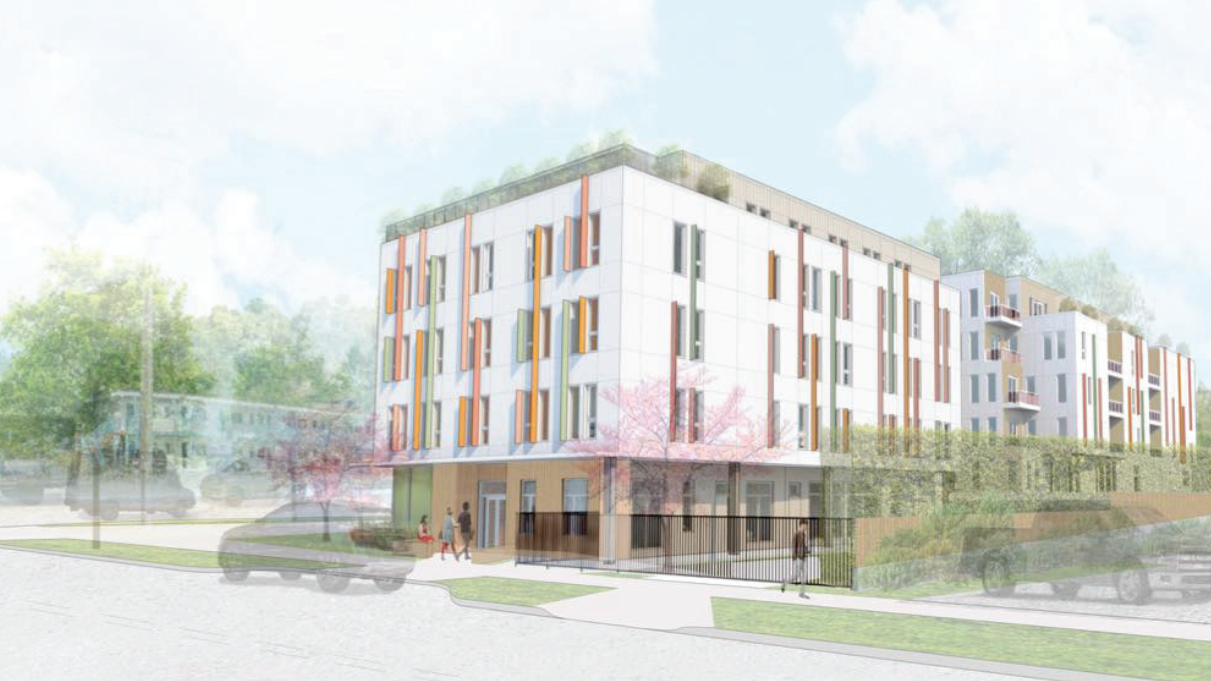
Looking at the property from Bryden St., towards Terminal Ave. to the left, the five-storey structures would provide a range of supports and services for residents only under amended zoning. (Image Credit: Ron Hart Architecture)
While dry housing is largely favoured by many experts, Dr. Roger Walmsley suggested any path forward needed to be gradual.
An addiction medicine physician in Nanaimo, Dr. Walmsley said successful recovery is layered.
“I think it needs to start small with a few well-chosen clients and build over time. I am curious about the screening process for applicants and the provisions for relapse. Relapse needs to be recognized as an integral part of recovery, and most important is the degree of collaboration and integration with the larger community of citizen groups, peer supports, and healthcare agencies.”
He added heavy opioid users going straight into dry housing is typically not a recipe for success, and a transition toward a safe supply of opioids is often needed before the individual can become completely sober.
Walmsley said there is an interesting ‘chicken and the egg’-type discussion around the province’s current housing-first model.
Should those struggling with substance abuse be given housing in a bid to become sober, or do they need to be sober before getting stable housing?
“A lot of people end up using drugs because they don’t have housing, and a lot of people that end up on the street, they end up using street drugs to stay alive,” Walmsley added. “There are many instances of people that use stimulants to stay up overnight in the winter so they don’t die of cold, so that they don’t lose all their belongings, so that they have some sort of security to make it to the morning.”
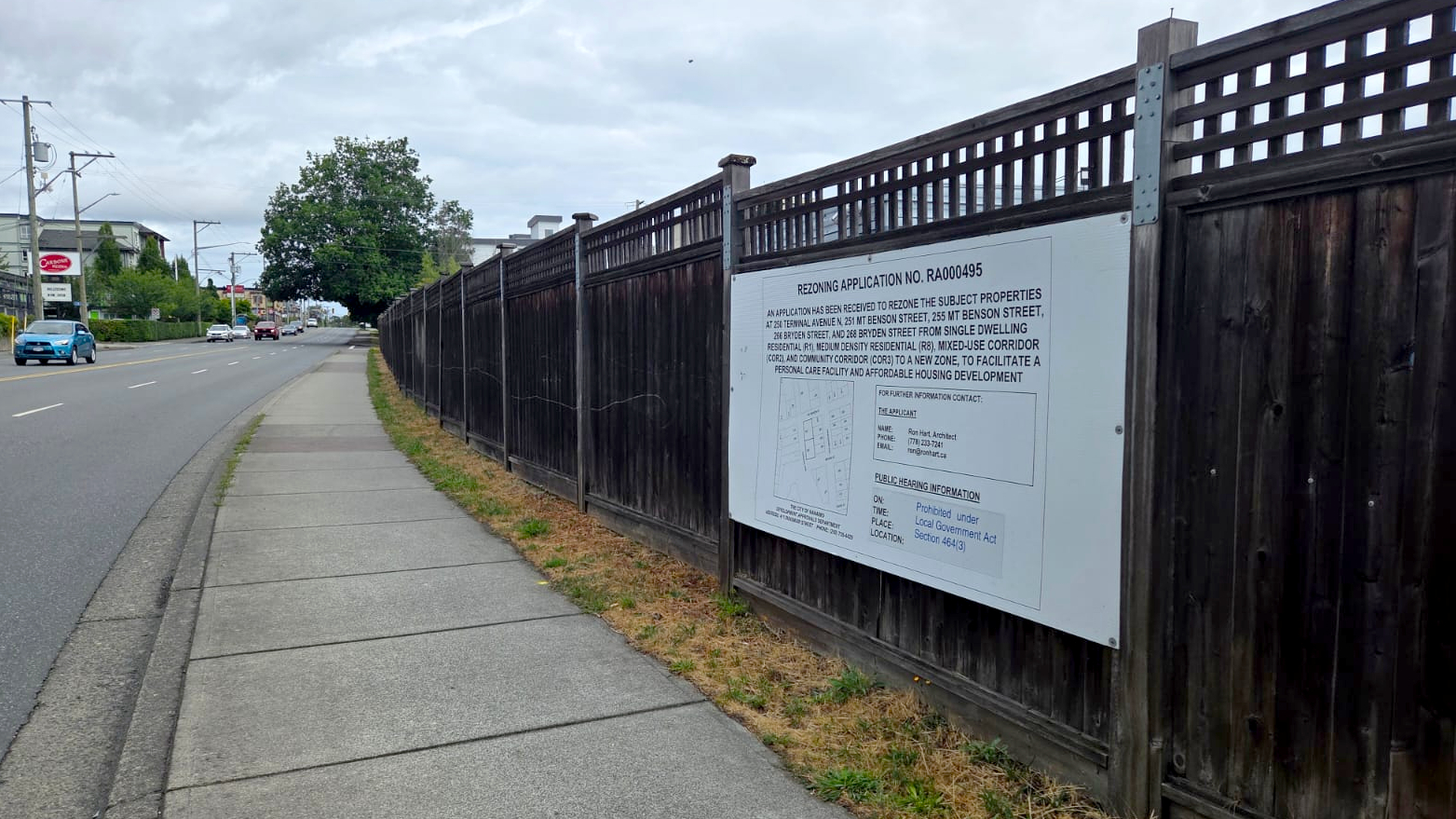
Changes to 250 Terminal Ave. are expected in the coming months and years, however the model of care is up for debate. (Image Credit: Alex Rawnsley/NanaimoNewsNOW)
Katlyn Tolton, deputy warden at Nanaimo Correctional Centre (NCC), told councillors every individual recovery journey is different, and supports and services must reflect those differences.
Tolton currently oversees the immensely successful Guthrie Therapeutic Community program within NCC, which helps reintegrate substance users and offenders back into the community.
“For some, success is going to look different. For some, it might just be completing a program or reducing substance use, or it might be simply engaging with their staff and peers better than they did before. It’s critical that we recognize progress is individualized, and with that, accept that reintegration requirements will also require a varying level of ongoing support.”
Being discharged into the community without a stable environment to live in increases the risk of relapse, Tolton said, stating it’s rarely “a lack of motivation that leads to their relapse, it’s a lack of appropriate environment and support once they leave our care.”
Council’s decision
City Councillors voted unanimously, 8-0, to strongly urge the province to shift its path on upgrades at 250 Terminal Ave., to ensure the facility is dry with no substance or alcohol use permitted for residents.
Coun. Sheryl Armstrong, a former RCMP officer, said dry housing is the path forward but must be flexible enough to allow for imperfections in people’s recovery.
“People are going to relapse. You shouldn’t be kicked out for [relapsing]. I think that’s a really important point [for] whatever model we look at. I don’t know many alcoholics, I don’t know many drug users that get clean on the first try. I’m sure there’s some, but I’m sure they’re probably in the minority.”
Mayor Leonard Krog didn’t mince words when he said dry, supportive housing was clearly missing in the community.
He said the presentations on Monday night clearly outlined the high need for a range of supportive housing types.
“It strikes me as absolutely insane, the concept that you wouldn’t have that as part of the continuum of care. If you believe housing is a right, then I think part of that right is the right to live in a place that is safe and secure.”
Coun. Ben Geselbracht agreed, noting there was an over-reliance on one type of housing in Nanaimo for those seeking recovery.
“I think this leaves a gap for people who are committed and working on recovery, staying clean and sober, and that would be at greater risk for relapse or increased drug use if their housing environments is where the substance use is common,” Geselbracht said.
City staff will now draft a letter for Krog to sign, addressed to the Minister of Housing and Municipal Affairs Minister Christine Boyle, strongly urging a dry housing model at 250 Terminal Ave.
The letter will relay evidence presented on Monday, and collected over the past months and years, and outline the severe need to better assist rehabilitation efforts for those seeking recovery in Nanaimo.
Tyler Brown was the lone councillor absent from Monday evening’s meeting.
— with files from Ian Holmes
Follow us on Facebook. Join Everything Nanaimo on Facebook and stay connected with everything happening on central Vancouver Island.
Follow us on: Twitter (X) | Bluesky | Facebook